Cleansing balms and cleansing oils are often shelved side by side, and for good reason. Both are oil-based cleansers designed to dissolve makeup, sunscreen, excess sebum, and daily impurities.
So the useful question is rarely which one is better. It is which format suits you.
The difference comes down largely to texture, format, application, and personal preference. And when choosing a cleansing balm, the formulation itself matters just as much as the format—particularly if you want a thorough cleanse without needing a second step.
Here is how they compare.
What They Have in Common
The principle behind both is one chemists describe as “like dissolves like.” Many of the things that accumulate on your skin throughout the day—makeup, sunscreen, excess sebum and other oil-based impurities—are not easily removed by water alone.
An oil-based cleanser works with that chemistry. Whether it is a liquid oil or a balm, the oils in the formula help dissolve and loosen oil-soluble impurities, allowing them to be lifted away as the cleanser is emulsified with water and rinsed.
But cleansing is not simply about removing everything from the skin. How you remove it matters too. A well-formulated oil cleanser can thoroughly dissolve daily buildup while helping the skin avoid that unnecessarily tight or stripped feeling that some cleansing formulations can leave behind.
The chemistry is similar. The experience can be very different.
The Key Differences
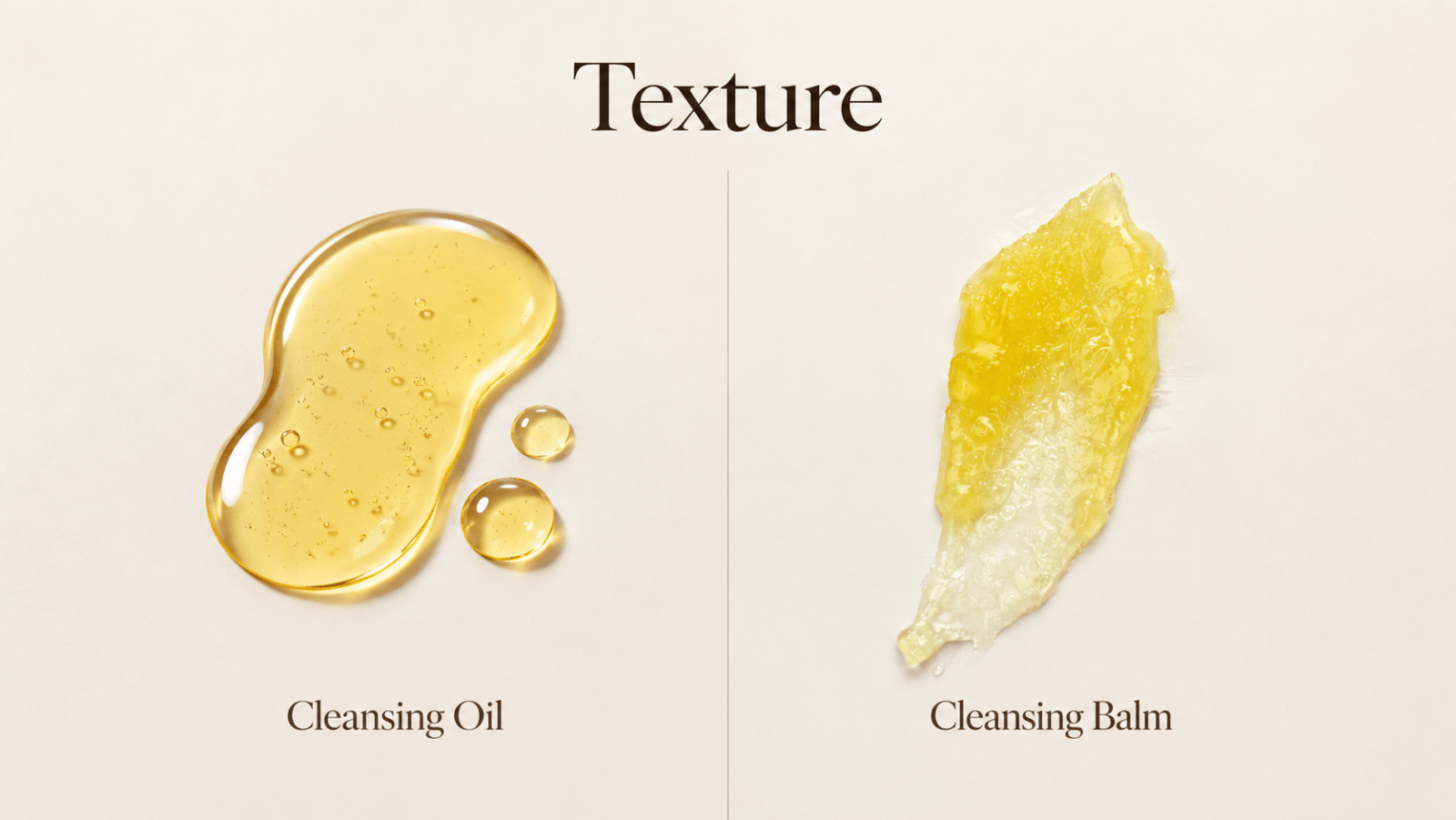
The most obvious difference is the format. A cleansing oil is liquid, while a cleansing balm starts as a solid and melts into an oil as it comes into contact with the warmth of your skin.
That difference in format changes the experience in several ways:
- Texture — a cleansing oil is ready to spread immediately, while a balm transforms from a solid into a silky oil as it is warmed between the fingertips.
- Application — a balm is warmed between the fingertips before application, creating a more tactile, cushioning cleansing ritual as it melts over the skin.
- Portability — the solid format of a balm is less prone to spills and can be convenient for travel.
- Sensory experience — many people enjoy the richer, more enveloping feel of a balm and the ritual of watching it melt into the skin before emulsifying with water.
- Formulation — some cleansing balms are water-less, meaning they are formulated without added water. This is a characteristic of the individual formulation, not of cleansing balms as a category.
Neither format is inherently better. They simply offer different ways to experience oil-based cleansing.
Which Should You Choose?
Both cleansing oils and cleansing balms can work across different skin types. The more useful question is which texture and formulation you prefer to use consistently.
A cleansing oil may appeal if you prefer a lightweight, fluid texture and an effortless application. A balm offers a more substantial, controlled massage and can feel particularly comforting when your skin is prone to dryness or sensitivity.
If you wear makeup or sunscreen regularly, both formats can be effective at dissolving those oil-based layers. What matters most is the formulation, how thoroughly it emulsifies and rinses, and how your skin feels afterwards.
Ultimately, the best cleanser is one that you enjoy using and that leaves your skin feeling clean, comfortable and cared for.
Where a Cleansing Balm Can Offer Something Different
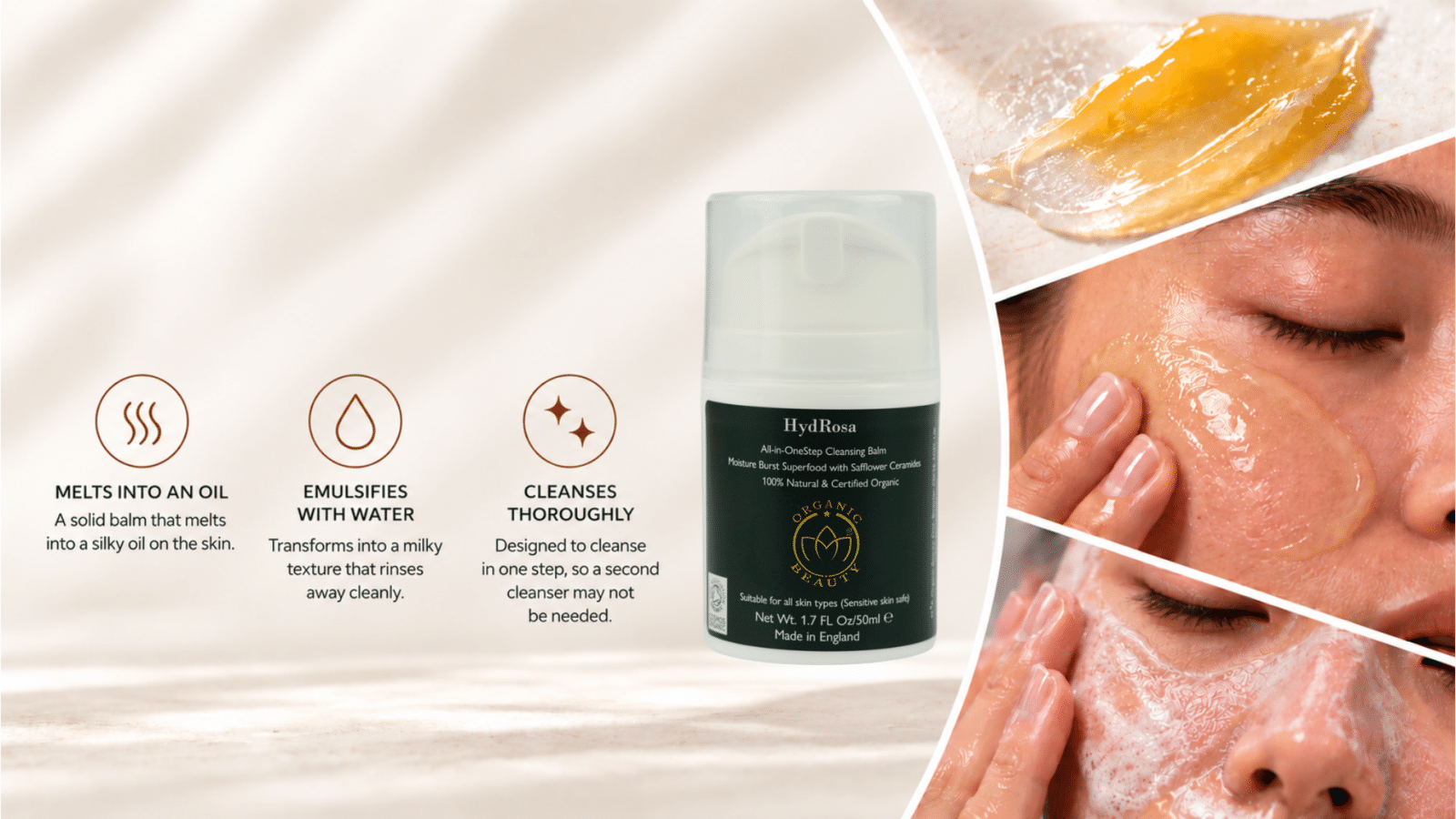
A well-formulated cleansing balm can turn cleansing into a more considered ritual. Its solid texture melts into an oil on the skin, then emulsifies with water into a milky texture that can rinse away cleanly.
When the formulation is designed to cleanse thoroughly in one step, there may be no need to follow with a second cleanser.
That distinction matters. A cleansing balm is still a cleanser—not a leave-on facial oil—and its role is to dissolve and remove what has accumulated on the skin before the rest of your routine begins.
How to Use a Cleansing Balm or Oil
The basic method is simple.
Apply your cleansing balm or oil to dry skin and massage gently, allowing the formula time to dissolve makeup, sunscreen, excess sebum and daily impurities. Add a little water and continue massaging until the formula emulsifies, then rinse thoroughly.
A well-formulated cleanser should do the work without vigorous rubbing or unnecessary friction.
And while many oil cleansers are used as part of a double-cleansing routine, a thoroughly formulated cleansing balm can also be designed to cleanse effectively on its own. Whether you need a second cleanse depends on the individual formula and how your skin feels afterwards.
How HydRosa Fits In
This is where formulation makes the difference.
Our HydRosa All-in-OneStep Cleansing Balm is COSMOS Certified Organic and water-less, formulated with carefully selected, linoleic-acid-rich botanicals including safflower, rose and rosemary.
It melts into the skin, helps dissolve makeup, sunscreen, excess sebum and daily impurities, then transforms into a silky milk when water is added and rinses clean in one step.
There is no added water in the formulation. Instead, HydRosa is built around a considered blend of potent botanical ingredients, with the formulation designed specifically for a thorough one-step cleanse.
Handcrafted in England.
Consciously be you. Be beautiful.